
CHRONICLES AI

Beyond profiles to
living customer stories

Chronicles AI builds a dynamic, evolving model of each individual, accumulating goals, preferences, behavior and life circumstances, so every decision is reasoned through the whole story not a static record.

Get started Learn more
THE PROBLEM 

Personalization has hit a ceiling.

Segments, demographics and last product purchased can tell you who a customer resembles. They cannot tell you what a customer is trying to do, and relevance lives entirely in that gap. Intent, deep behaviour and live context are what separate an experience a customer acts on from one they dismiss, and almost none of it exists as a field in a CRM.

The engagement maturity curve

MEANINGFUL INFORMATION

Broad segmentation & CRM data

A generalized view of what a cohort needs, accurate about the group, approximate about the person.

CONTEXTUAL INTELLIGENCE

Intent & behavioural data

Contextual understanding begins: what someone is doing, through which channel, and why they started.

ACTIONABLE WISDOM

A living model: Chronicles

A real-time, individual view of individual goals and circumstances, current enough to act on and explain.

What it runs on
  • Geography, age, gender
  • Centralized customer profiles
  • Product holdings and history
What it adds
  • Product adoption and channel preference
  • Dynamic attributes
  • Trigger-based interactions
  • Stated intent and needs
What it unlocks
  • Persistent per-person memory
  • Goals, preferences, life circumstances
  • Reasoned, explainable recommendations
  • Unified AI and data alliances
WHAT ARE CHRONICLES?

A living model of an entity, not a static record.

A Chronicle is a persistent, evolving knowledge graph of a single individual or entity that continuously updates with goals, preferences, behaviours and life circumstances.
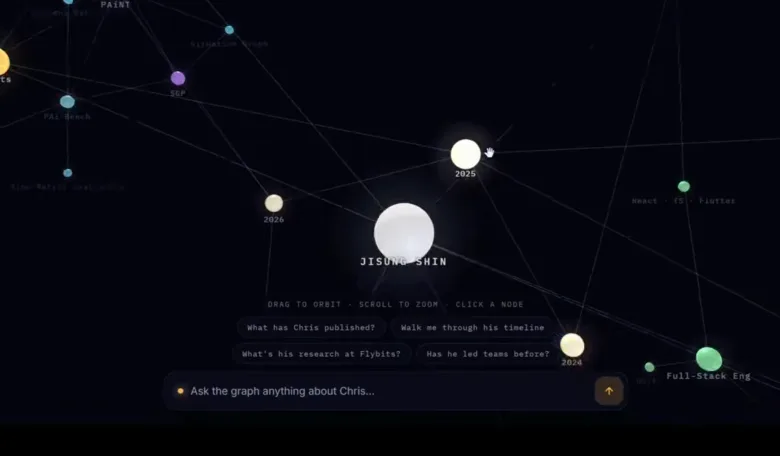
One subject as a focus
Every Chronicle models a single entity — a customer, a household, an advisor. Everything the graph accumulates represents their context.
Situations, not spreadsheets
A signal is stored as a structured situation carrying who, when, where, the activity and what it meant. This is the unit a decision can actually be reasoned from.
Defined relationships
Edges are formal relations from an upper ontology, which is what lets a payment, a document and a location update sit in the same graph and be compared.
It grows and re-weights
New situations attach, recurring ones strengthen, stale ones decay. The Chronicle evolves rather than being overwritten by the latest snapshot.
WHY CHRONICLES?

The deeper the story, the better the decision.

A Chronicle tells the story of an individual or an entity, and that deeper view is what produces better decisions and better outcomes. 

Reasoned recommendations derived from the customer’s own context, so every suggestion is hyper-relevant.

Potential risk, a squeeze, or a life event surfaces while there is still time to act, not in the quarterly read-out.

Every output traces back through the graph, so transparent explainability is a property of the structure.

Relationship intelligence stays with the institution when top talent leaves, instead of walking out with them.

Chronicles In Action

Chronicles AI for risk and fraud

Risk teams work from snapshots: a score computed last month, an alert raised after the money moved. A Chronicle holds the account’s whole trajectory, so the same signals read as a direction rather than a reading — and the pattern shows up while it is still forming.
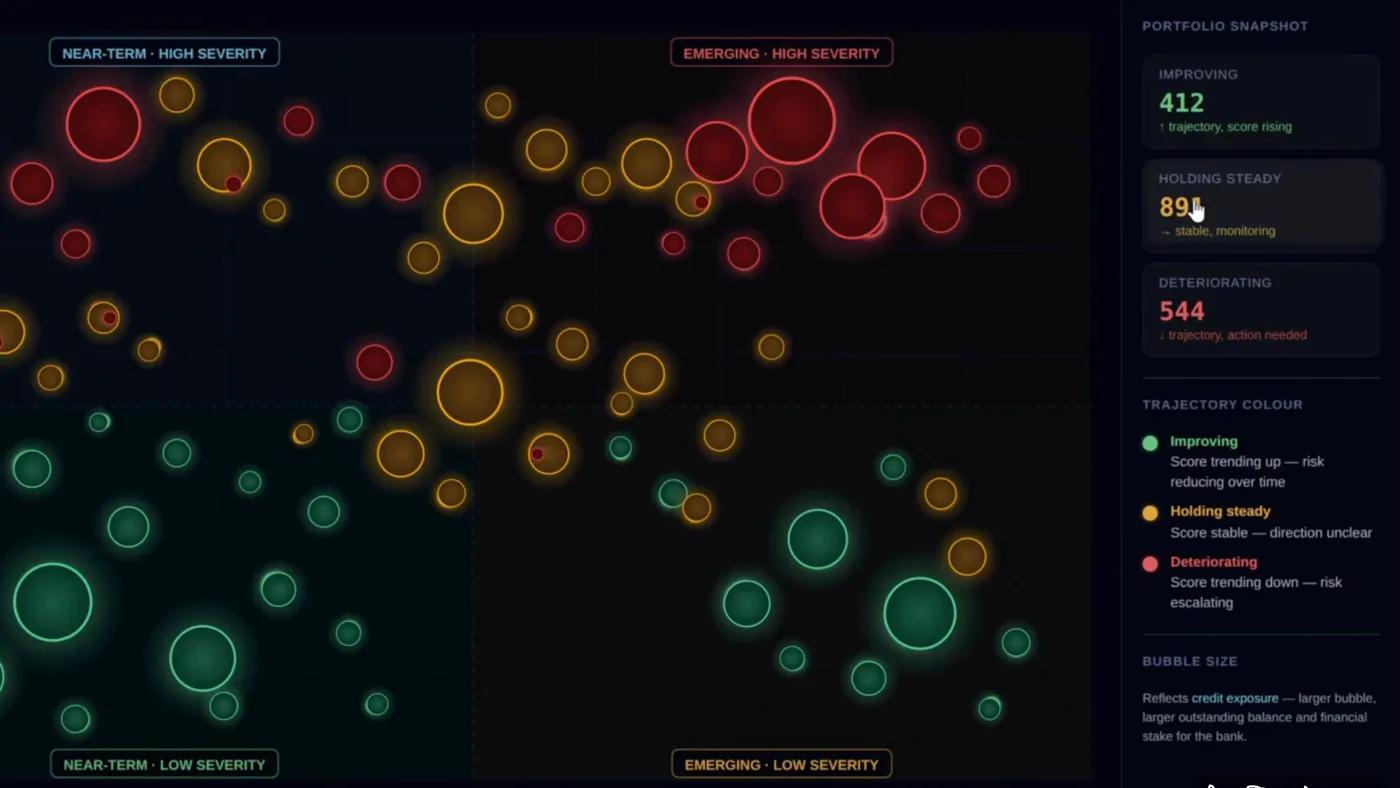
A portfolio risk map of colored bubbles sized by exposure, grouped by improving, holding steady and deteriorating trajectory
Real-time scoring

Credit card risk assessment

Utilization, payment behaviour and bureau activity synthesized into a live default risk score that updates as account activity changes — not a monthly recalculation of who the customer used to be.

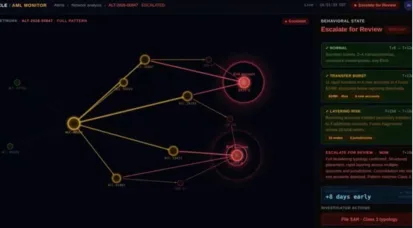
A network monitoring dashboard showing an AML monitor graph with escalation flags
Continuous monitoring

AML tracker

Account transfers and transaction activity analysed in real time to flag patterns consistent with money laundering, including transfer-burst behaviour that only reads as a pattern across the account’s history.

In The News
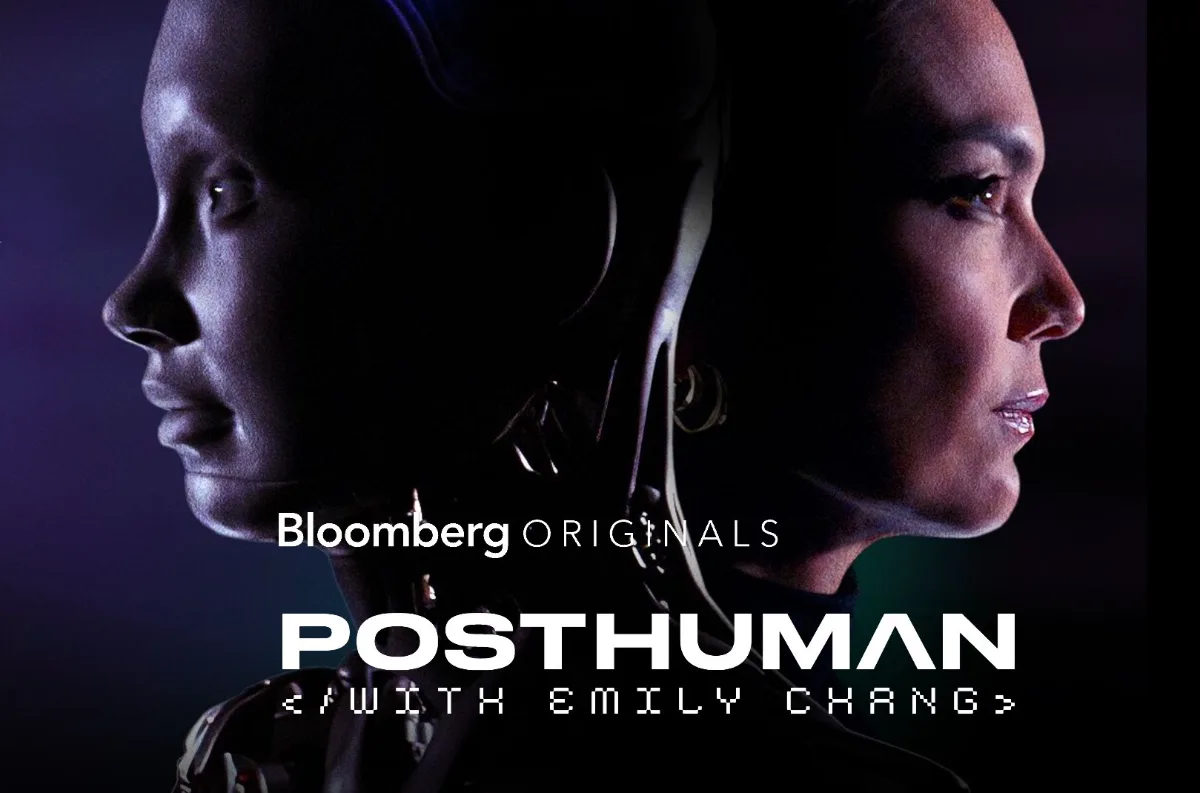
Hossein Rahnama speaking with Emily Chang on Bloomberg Originals
Bloomberg Originals

How tech is breaking the rules of biology

Our founder Hossein Rahnama sits down with Emily Chang to talk through the idea underneath Chronicles: that a person’s accumulated context — their goals, their history, the way they actually make decisions — can be modelled, and what it means when it can.

Watch now
Under The Hood

The Chronicle pipeline: construction, learning, reasoning.

Every Chronicle runs the same three stages. Raw signals are built into structured situations, those situations accumulate into a model of the individual or entity, and questions are answered against that model, grounded in the specific situations that support the answer.

LEARNING REASONING CHRONICLE Construction CHRONICLE Utilization
Stage 1

Construction

1.1Initialize from profile and first channel data
1.2Embed each channel’s content in its own pipeline
1.3Resolve embeddings into a situation graph for the segment
Stage 2

Learning

2.1Embed the graph so segments are comparable
2.2Weigh which situations matter (situation attention)
2.3Update the identity model (identity inference)
Stage 3

Reasoning

3.1Retrieve relevant concepts by semantic similarity
3.2Traverse the graph for the situations that relate
3.3Compose a grounded answer with a fine-tuned model
Construction

Situations, typed on a formal ontology

A situation is a node with formal relations to the entities that constitute it. Using an upper ontology — DOLCE Ultralite — rather than an ad-hoc schema is what lets situations captured from different channels be compared, merged and reasoned over together.

Situationhas_timeTime
Situationhas_placePlace
Situationhas_participantPerson
Situationelicits_emotionEmotion
PersonexperiencesEmotion
Personinvolves_inActivity
Personassociates_withPersonality Trait
SituationinvolvesObject / Event
Learning

One graph per time segment, concentrated over time

Construction initialises a Chronicle from a profile and the first segment of channel data. Each channel — image, text, audio — passes through its own content-embedding pipeline, and a graph-embedding pipeline places the resulting situation graph in the same space so segments can be compared. As segments repeat, situation attention and identity inference concentrate the graph: reinforcing what recurs, decaying what does not, and revising the identity model as the entity changes.

IMAGECHANNEL C1TEXTCHANNEL C2AUDIOCHANNEL C3 ContentEMBEDDING PIPELINEContentEMBEDDING PIPELINEContentEMBEDDING PIPELINE Situation graphSG AT SEGMENT S1 GraphEMBEDDING PIPELINE Situation attentionWHAT MATTERS Identity inferenceWHO THEY ARE NOW IdentitymodelDUL ONTOLOGY the next time segment re-enters the same graph 1 — 2425 — 4849 — 9697 — 120 TIME SEGMENTS

Chronicle learning across one time segment. The loop is the point — each new segment re-enters the same graph rather than replacing it.

Reasoning

Answers that carry their evidence

A question retrieves relevant concepts by semantic similarity, traverses the graph for the situations related to them, and a fine-tuned model composes the answer from what was retrieved. Because every node holds a description and a link back to its source artefact, the answer arrives with the situations that produced it attached — which is what makes it reviewable rather than merely fluent.

PromptA QUESTION ASKED OFTHE CHRONICLE Semantic retrievalRELEVANT CONCEPTS Graph traversalTYPED RELATIONS Node recognitionTYPE AND ROLE Fine-tuned modelCOMPOSES THE ANSWER Reason-ready chronicleEVERY NODE CARRIES A TYPE, A NAME, A DESCRIPTION, A SOURCE LINK AND ITS EMBEDDING Grounded answerWITH THE SITUATIONSTHAT SUPPORT IT nothing is asserted that the graph cannot point at

Chronicle reasoning. The three retrieval steps all read from the reason-ready chronicle; the model composes, it does not invent.

Contact us

Want to start building with Chronicles today?

Get in touch